
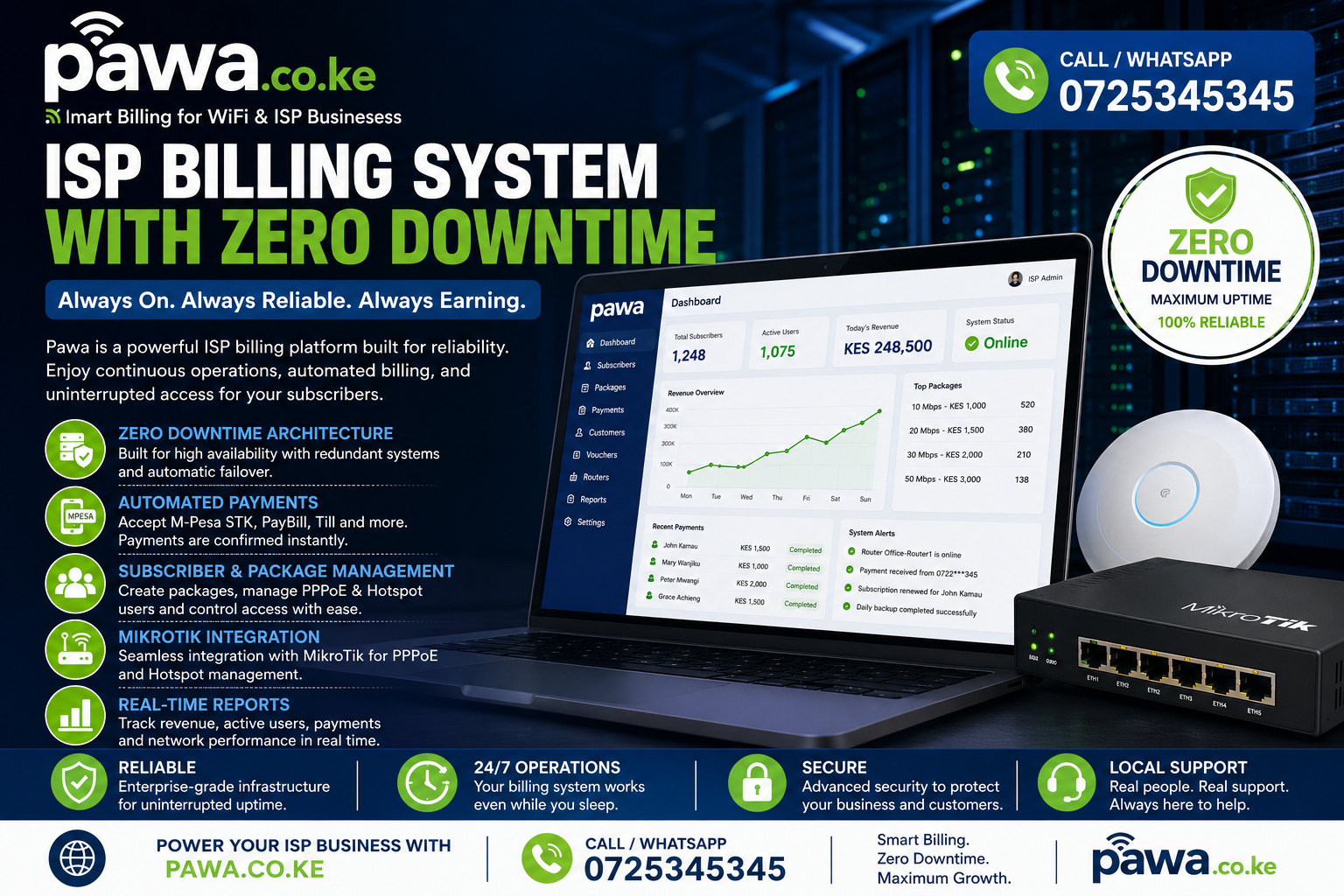
A product demo is the single most valuable hour a business owner can spend before buying software — the live, guided session where a platform shows you exactly what it does, on real screens, answering your real questions, before a single shilling changes hands. Every experienced buyer knows the difference between the two ways of purchasing technology.
There is the blind way: reading brochures, trusting sales pages, and signing up for whatever sounded impressive.
Then there is the smart way: watching the product work, testing it with your own scenarios, and asking every question your business will depend on.
A product demo is the gateway to that smart way, and the owners who insist on one before every purchase make measurably better decisions than those who don’t.
This article walks through the complete discipline: what a great demo actually involves, how to prepare for one, what to watch for, which questions separate the genuine platforms from the polished ones, and how to turn a single hour of demonstration into the most confident purchase decision you have ever made. Because software will run your business’s money, customers, and daily operations for years — and a product demo is the only chance you get to meet it before the commitment begins.
Table of Contents
ToggleWhat a Product Demo Actually Is
Strip away the sales vocabulary and the concept is refreshingly practical. A product demo is a live session where a software provider walks you through their platform in operation — showing the actual interface, running actual processes, and demonstrating the exact workflows your business will use daily.
It is not a video, not a slideshow, and not a feature list. A genuine product demo is interactive: you direct the flow, you ask questions mid-screen, and you steer the demonstration toward the scenarios that matter to your specific business.
The session typically covers the platform’s core journey: how a customer experiences the product, how you manage it from your side, and how the whole system reports back to you. For a billing or hotspot platform, that means the customer’s purchase flow, the owner’s dashboard, and the records connecting both.
What makes a product demo valuable is precisely what makes it different from marketing: marketing shows the platform at its best on the vendor’s terms, while a demo shows it working under your direction, on your questions, against your scenarios.
The best demos are conversations rather than presentations. The vendor demonstrates, you interrupt with questions, they show rather than explain, and by the end of the hour you have seen more truth than any brochure could carry.
That is the standard to hold every product demo to — and the rest of this article shows you exactly how to get it.
Why Demos Matter More Than Brochures
The case for insisting on a product demo rests on a simple truth: software behaves differently in marketing than it does in life, and the gap between the two is where bad purchases are born.
The first gap is the feature-words problem. Brochures describe capabilities in language like “automated,” “seamless,” and “real-time” — words that sound identical across every vendor while meaning completely different things in practice.
Only a live product demo reveals what “seamless” actually means on a specific platform: does the payment confirm in three seconds or thirty? Does the report load instantly or after an export? The words cannot answer that; the screen can.
The second gap is the fit problem: no two businesses run identically, and a platform that suits a fifty-customer network may frustrate a five-hundred-customer one.
A demo lets you hold your own situation up against the product — “here is my scale, my packages, my customer types — show me how you handle mine” — which is the only evaluation that predicts your actual experience.
The third gap is the hidden-cost problem: the fee schedule, the add-on pricing, and the support terms all live outside the brochure, and a product demo is where you extract them before they surprise you.
The fourth gap is the support problem: the team answering your demo questions today is the team answering your emergencies tomorrow, and the demo is your first live sample of how they behave.
Buyers who ran every major purchase through a product demo report the same pattern: the platforms that impressed on paper and failed on screen saved them from subscriptions, migrations, and months of frustration.
That saving — one hour of demonstration against months of regret — is the entire economics of the discipline.
How to Book a Demo and Prepare for It
The value you extract from a product demo is decided before the session begins — because preparation is what turns a vendor’s presentation into your evaluation.
Booking is usually simple: a form on the provider’s website, a phone call, or a message — with most serious vendors offering demos freely and scheduling within days.
The preparation begins with writing your requirements down: what your business sells, how many customers you serve, which payment flows matter, and the scale you intend to reach.
That one page becomes your demo script — the list of things you need to see, stated in your business’s language rather than the vendor’s.
The second preparation step is assembling your test scenarios: the three or four situations your business actually meets, such as a new customer buying for the first time, a regular renewing, a payment failing mid-purchase, and a report being pulled at month-end.
A product demo evaluated against your own scenarios tells you things no generic walkthrough can — because the vendor’s standard script shows what they want to show, while your scenarios reveal what you need to know.
The third step is choosing the right people on your side: the owner, plus whoever will operate the system daily — the attendant, the manager, the technician.
Their questions surface adoption issues that owners alone never think to ask, and their buy-in is what makes any eventual deployment real.
The fourth step is preparing your questions in writing, so nothing important gets forgotten in the flow of the session.
Operators who prepared this way describe their product demo sessions as completely different experiences: the vendor arrives to present, and leaves having been examined — which is exactly the right order of things.
What to Watch During the Demo
The demonstration hour carries more information per minute than any other stage of evaluation — and knowing what to watch turns a product demo from a show into an audit.
The first thing to watch is the customer experience: the vendor should open the actual portal on an actual phone — ideally a cheap one — and walk through a purchase the way your customers will.
Watch the load time, the clarity of the packages, the payment prompt’s arrival, and the seconds between PIN and access. That single flow is where your revenue will live or die, and watching it live tells you more than an hour of feature talk.
The second thing to watch is your side of the system: the dashboard where you will spend your mornings.
Ask the vendor to pull the reports you will actually need — today’s revenue, package performance, active users — and time how long the answers take. A capable product demo shows a dashboard that answers in seconds; a weak one hides behind menus and exports.
The third thing to watch is the handling of failure: ask them to demonstrate a cancelled payment, an expired session, or a wrong purchase — because the platform’s behavior when things go wrong matters more than its behavior when everything works.
The fourth is the flexibility demonstration: ask them to change a price, add a package, or adjust a setting live — and watch whether the platform bends in minutes or requires a process.
The fifth is the edge cases specific to your business: the customer type, the package structure, or the scale scenario that your operation uniquely meets.
A product demo that survives your edge cases is worth shortlisting; one that avoids them is answering a question without words.
And throughout, watch the vendor’s own behavior: do they show readily, explain plainly, and admit limits honestly — or do they deflect, oversell, and dodge?
The platform is half the evaluation; the people presenting it are the other half, and the product demo is where you meet both at once.
The Questions Worth Asking
The questions you carry into a product demo determine what you learn — and a short list of pointed questions has separated the genuine platforms from the polished ones in every market.
The first question is about cost in full: “What will this cost me per month at my scale, all-in — subscription, transaction fees, support tiers, and everything else?”
The vendors who answer with one honest number are telling you how they will treat you forever; the ones who perform arithmetic theater are answering a different question entirely.
The second is about failure: “What happens when the power goes out mid-session, or the internet drops during a payment?”
A serious platform answers with architecture — sessions persisting, records surviving, activations completing on recovery. A weak one answers with reassurance, which is not a feature.
The third is about scale: “Show me a customer running at the size I intend to reach.”
Reference customers at your target scale are the only proof that a product demo performance will hold when your numbers grow.
The fourth is about support: “Who answers when something breaks at 9 p.m. on a Sunday — and how fast?”
The fifth is about your data: “If I ever leave, how easily do my records, customers, and history move with me?”
Data portability asked at the demo prevents the switching crisis discovered years later.
The sixth is about the roadmap: “What are you building next, and how do updates reach me?”
A platform with momentum is a platform whose value grows under you.
And the seventh question is the simplest and most revealing: “What does your platform do badly?”
Every honest vendor has an answer, and their honesty in that moment predicts every future interaction better than any feature they demonstrate.
Buyers who carried these seven questions into every product demo describe the sessions as completely different experiences: the vendors who welcomed the questions earned trust on the spot, and the ones who bristled had answered a deeper question by reflex.
Testing Your Own Scenarios: Turning the Demo Into a Rehearsal
The most valuable stretch of any product demo is the part you direct — the minutes where the vendor stops presenting your their script and starts demonstrating yours.
Begin with your most common transaction: the purchase your business completes hundreds of times a week.
“Show me exactly this — my package, my price, my customer’s cheapest phone — from connection to browsing.”
Watch it run, time it honestly, and imagine the queue of customers behind it.
Then run your complication scenarios: the renewal, the upgrade, the mid-session expiry, the customer who pays but does not connect.
Every serious product demo should absorb these requests without hesitation — because they are not edge cases to your business, they are Tuesday.
Then test the management side: “Now show me the same day from my seat — the dashboard I will open every morning.”
You are rehearsing your own future routine, and the platform’s smoothness under your scenarios is the most honest prediction of your satisfaction available.
Where the vendor cannot demonstrate something live, watch how they handle the gap: a genuine “let me show you why we handle that differently” is worth more than a manufactured yes.
Buyers who rehearsed their businesses inside their product demo sessions describe the payoff at deployment: launch day arrived feeling like the tenth day rather than the first, because they had already watched their business run on the platform.
That rehearsal — one directed hour — is what separates buyers who chose from buyers who gambled.
Red Flags: What a Demo Reveals When Things Go Quiet
A product demo is equally valuable for what it refuses to show — and the red flags are worth naming, because they disqualify platforms before they can cost you.
The first red flag is the demo-only environment: a vendor who will not demonstrate on real devices or real payment flows, keeping everything inside polished simulations.
If the platform cannot be seen honestly, it cannot be trusted blindly.
The second is the feature dodge: questions answered with “yes, it does that” rather than “here, watch.”
Every unverified claim during a product demo is a promise you will be verifying the hard way after purchase.
The third is the cost opacity: the all-in pricing question met with tiers, ranges, and “it depends” — when your scale is known and the number should not be.
The fourth is the support vagueness: no named response times, no local hours, no reference customers willing to vouch.
The fifth is the pressure pattern: artificial urgency, expiring discounts, and the push to sign before you have tested — because confidence sells through demonstration, while doubt sells through deadlines.
The sixth is the criticism dodge: a vendor who cannot name a single weakness in their own product is either not paying attention or not being honest, and either disqualifies them.
Buyers who tracked these six flags across their product demo sessions describe how quickly the field cleared: most platforms reveal themselves within one hour, one way or the other.
That clarity is the demo’s deepest value — it ends the guessing that brochures begin.
Demo Versus Free Trial: Using Both Wisely
The strongest evaluations run a product demo and a free trial together — because each answers questions the other cannot.
The demo is guided and efficient: in one hour, the vendor shows the platform’s full depth, answers your questions live, and demonstrates capabilities you might never find alone.
The trial is independent and honest: over days or weeks, you live inside the platform on your own hardware, at your own pace, discovering what the demo could never reveal.
The professional sequence runs demo first, trial second: the product demo tells you whether the platform deserves a deeper look, and the trial verifies everything the demo claimed.
Skipping the demo and diving into a trial wastes your time on platforms that a single hour would have eliminated.
Skipping the trial and buying on the demo alone leaves the vendor’s claims unverified on your actual network and hardware.
Together, the two form the complete evaluation: the demo for depth and direction, the trial for truth and feel.
And the sequence respects your time — one hour of demonstration protecting weeks of trial effort from being spent on the wrong candidates.
Operators who ran both stages describe the confidence difference precisely: by purchase day, nothing about the platform was a promise anymore — every claim had been watched, and every workflow had been lived.
That is what a complete evaluation feels like, and it begins with booking the product demo that starts it.
After the Demo: Turning One Hour Into a Decision
The hour after a product demo is where the value gets harvested — and a short, structured debrief converts impressions into decisions.
The first step is immediate notes: written while the session is fresh — what was shown, what was claimed, what was dodged, and how the vendor handled your questions.
Memory degrades within days, and the demos you evaluate side by side blur into each other without notes.
The second step is scoring against your requirements: the one-page script you prepared before the session, marked honestly — what did the platform demonstrate, what did it merely claim, and what did it avoid?
The third step is the team debrief: the attendant, the manager, the technician who attended — their observations on usability and daily fit are the earliest adoption signals available.
The fourth step is the follow-up: any question the demo left open gets asked in writing, and the vendor’s response speed and clarity become one more data point.
The fifth step is comparison: two or three demos scored on the same sheet reveal a ranking that instinct alone never produces.
And the final step is the decision itself: proceed to a trial with the top candidate, negotiate from the evidence in hand, or walk away having spent an hour to save months.
Buyers who institutionalized this debrief describe their purchases as the most confident of their careers — every product demo became a chapter of evidence rather than a mood.
And the evidence compounds: the discipline that evaluates one platform well evaluates a whole portfolio of decisions for years afterward.
The Mistakes Owners Make With Demos
The demo stage has its own predictable failures — ways owners waste the hour or draw wrong conclusions — and naming them protects the evaluation.
The first mistake is the passive hour: sitting through the vendor’s script without steering, and emerging impressed by things you never needed and untested on everything you did.
The second is the solo evaluation: attending without the staff who will live inside the system, and discovering their objections after the purchase instead of during the demo.
The third is the polish trap: judging the presentation rather than the product — forgetting that a smooth talker and a smooth platform are different achievements.
The fourth is the single-candidate habit: one demo, one impression, one purchase — with no comparison to reveal whether what you saw was good or merely available.
The fifth is the skipped preparation: arriving without requirements or scenarios, and letting the vendor’s agenda fill the hour instead of yours.
The sixth is the brochure extension: treating the product demo as confirmation of what you already decided from the website — using the hour to reassure rather than examine.
The seventh is the memory purchase: deciding days later from recollection, when the notes were never taken and the candidates have blurred.
Each mistake is avoidable with the same discipline: prepare a script, bring your team, direct the hour, take notes, compare candidates, and decide on evidence.
The owners who ran their product demo evaluations that way describe the purchases that followed as the easiest decisions of their business lives — because nothing was left to hope.
The Payoff, Counted Honestly
Ask business owners who evaluated properly what their product demo discipline delivered, and the answers gather into four themes.
Better purchases: platforms chosen on demonstrated evidence rather than marketing — and still serving years later without regret.
Saved money: the wrong candidates eliminated in an hour each — the misfits, the opaque pricers, the vague supporters — every one a subscription and a migration avoided.
Faster deployments: the workflows watched during the demo becoming the workflows lived after purchase, with the team already oriented from the session.
And confidence: the quiet, durable kind that comes from knowing exactly what you bought and why — because you watched it work before you ever paid for it.
None of it required expertise, connections, or extra budget.
It required the discipline this article has described: prepare, direct, question, note, and compare — one hour at a time. Because software will run your business for years, and the product demo is the hour that decides whether those years run smoothly.
Frequently Asked Questions
How long should a good product demo take?
A thorough session runs forty-five minutes to an hour: enough to cover the core flows, your scenarios, and your questions without rushing. Vendors offering a proper product demo of that length are signaling confidence; those pushing fifteen-minute pitches are signaling something else.
Does a demo cost anything?
No — genuine product demo sessions are free, scheduled within days, and offered without obligation. Any vendor charging to show you their product is answering your evaluation question in advance.
Who should attend from my side?
The owner, plus whoever will operate the system daily — the attendant, the manager, the technician — because their usability questions surface adoption issues early. A product demo attended by the whole operating team produces twice the intelligence of one attended alone.
What if the vendor cannot demonstrate something live?
Note it, ask why, and watch the answer: a genuine explanation of design differences is acceptable, while a vague deflection is a red flag. Every unverified claim from a product demo becomes a post-purchase surprise — so verify or discount.
Should I run demos on multiple platforms before choosing?
Yes — two or three demos scored on the same checklist are what turn an impression into a ranking. The owners who compared product demo sessions side by side describe the final choice as obvious once the evidence was on the table.
Can I bring my own scenarios to a demo?
Absolutely — and you should: your real packages, your real customer types, and your real complications are exactly what the hour should test. A product demo run on your scenarios predicts your experience far better than the vendor’s standard script ever will.
What should I do immediately after the demo?
Write your notes, score your requirements sheet, debrief your team, and send any open questions in writing — while everything is fresh. The owners who debriefed within hours turned every product demo into a chapter of usable evidence.
Is a demo enough to make a purchase decision?
It is enough to shortlist — and the final verification belongs to a free trial on your own hardware, where the demo’s claims meet your network’s reality. The strongest purchases ran both: the product demo for direction, the trial for proof.
What is the smartest first step this week?
Write your one-page requirements and scenarios, shortlist two or three platforms, and book a demo with each — then direct every session against your own script.
That single week of preparation and sessions is how every confident purchase began, and the owners who ran it discovered the same truth every time: the software that would run their business deserved to be watched before it was trusted — and the product demo made that watching free, complete, and honest, turning purchase day from a gamble into a certainty, one demonstrated flow and one answered question at a time, through the product demo that let the owner buy with their eyes wide open.