
Hotspot Business Plan WiFi – A Complete Guide to Building a Profitable Internet Business
The demand for reliable internet continues to grow across Kenya as more people work remotely, study online, stream digital content, and rely on internet-based services every day. This increasing demand has created exciting opportunities for entrepreneurs to invest in hotspot businesses that provide affordable internet access to homes, businesses, apartments, schools, hotels, and public spaces. A well-prepared Hotspot Business Plan WiFi is the foundation of a successful internet business because it outlines your goals, investment requirements, target market, pricing strategy, and operational approach.
Starting a hotspot business without a proper plan often leads to poor financial decisions, inconsistent pricing, network performance issues, and difficulty attracting customers. A comprehensive Hotspot Business Plan WiFi helps entrepreneurs understand the market, estimate startup costs, identify revenue opportunities, and prepare for future expansion. It also serves as a valuable document when seeking financing or partnerships.
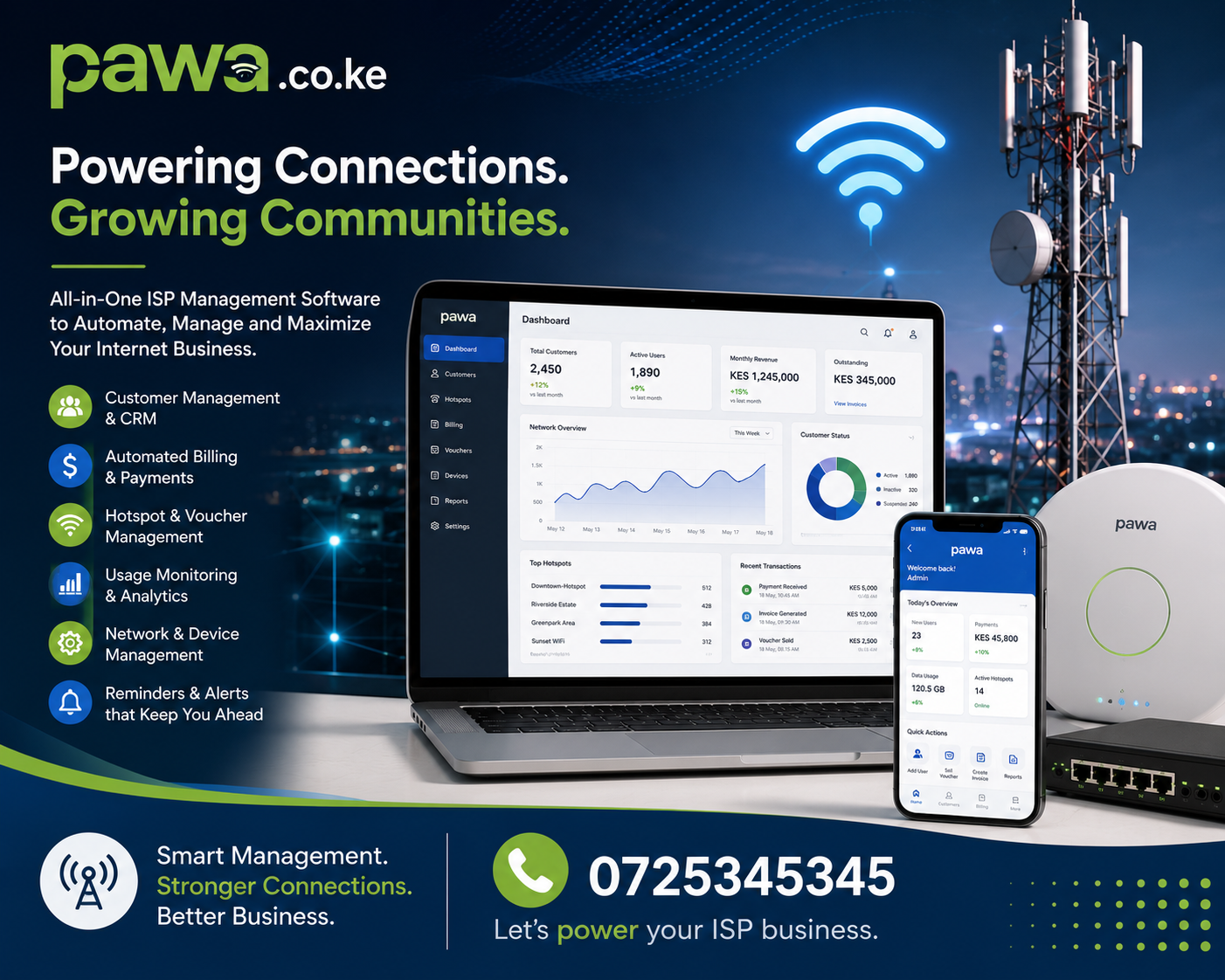
Pawa provides a complete hotspot management and ISP billing solution that helps entrepreneurs automate subscriber management, internet billing, M-Pesa payments, voucher generation, bandwidth allocation, and reporting. Combined with a solid business plan, Pawa gives hotspot operators the tools they need to build a profitable and scalable internet business.
Why You Need a Hotspot Business Plan WiFi
Every successful business begins with careful planning. A hotspot business is no different. Before purchasing networking equipment or leasing internet bandwidth, entrepreneurs should understand the local market, competition, customer expectations, and projected operating costs.
A well-developed Hotspot Business Plan WiFi helps business owners:
- Define clear business objectives.
- Identify target customers.
- Estimate startup costs.
- Forecast monthly revenue.
- Develop competitive pricing.
- Plan marketing activities.
- Manage operational risks.
- Create long-term growth strategies.
Planning also enables business owners to make informed investment decisions while reducing costly mistakes during implementation.
Understanding the Hotspot Business Model
A hotspot business generates income by providing internet access through wireless hotspots. Customers purchase internet packages based on their preferred usage period, such as hourly, daily, weekly, or monthly subscriptions.
The business purchases internet bandwidth from an upstream Internet Service Provider and distributes it to customers using wireless networking equipment and hotspot management software.
Common customers include:
- Apartment tenants.
- Residential estates.
- Hotels.
- Restaurants.
- Shopping centres.
- Schools.
- Offices.
- Public WiFi users.
Because internet demand continues throughout the year, the Hotspot Business Plan WiFi focuses on building recurring revenue through customer subscriptions and repeat usage.
Essential Components of a Hotspot Business Plan WiFi
An effective business plan should clearly explain how the hotspot business will operate and generate profits.
Executive Summary
The executive summary provides a brief overview of the business, including its objectives, target market, services offered, and growth strategy.
Market Analysis
Understanding the local market is essential. Business owners should research:
- Population density.
- Internet demand.
- Existing competitors.
- Customer pricing expectations.
- Coverage gaps.
- Business opportunities.
- Future market trends.
- Growth potential.
A strong market analysis helps determine whether the selected location has sufficient demand to support the business.
Products and Services
A Hotspot Business Plan WiFi should describe the internet services offered, including:
- Hourly internet access.
- Daily vouchers.
- Weekly subscriptions.
- Monthly packages.
- Home internet.
- Business connectivity.
- Apartment WiFi.
- Managed hotspot services.
Offering multiple service options helps attract a wider customer base.
Network Infrastructure
Reliable infrastructure is the backbone of every hotspot business.
Typical equipment includes:
- MikroTik routers.
- Wireless access points.
- Outdoor antennas.
- Network switches.
- Fibre or wireless backhaul.
- Customer Premises Equipment (CPE).
- Backup power systems.
- Network monitoring tools.
Investing in quality infrastructure reduces downtime and improves customer satisfaction.
Financial Planning
Financial projections help determine whether the business is viable.
The business plan should estimate:
- Startup costs.
- Equipment expenses.
- Internet bandwidth costs.
- Installation expenses.
- Monthly operating costs.
- Expected subscriber growth.
- Revenue projections.
- Profitability forecasts.
Accurate financial planning helps entrepreneurs prepare for both short-term operations and long-term expansion.
Automating Your Business with Pawa
Managing subscribers manually becomes increasingly difficult as the business grows. Pawa automates key operational processes, allowing hotspot operators to focus on customer acquisition and business development.
With Pawa, businesses can:
- Register subscribers.
- Generate internet vouchers.
- Process M-Pesa payments.
- Automate billing.
- Manage bandwidth.
- Monitor customer accounts.
- Generate reports.
- Scale operations efficiently.
Automation reduces administrative work while improving customer service and revenue collection.
Why Choose Pawa?
Pawa is built specifically for hotspot operators, apartment internet providers, ISPs, schools, hotels, and businesses offering managed internet services. It combines hotspot authentication, ISP billing, customer management, payment automation, bandwidth management, and reporting into one powerful platform.
Whether you are preparing your first Hotspot Business Plan WiFi or expanding an existing network, Pawa provides the technology needed to operate efficiently and grow your business with confidence.
Step-by-Step Guide to Launching a Successful Hotspot Business
A strong Hotspot Business Plan WiFi should not only describe your business idea but also provide a clear roadmap for implementation. Launching a hotspot business involves careful planning, strategic investment, and ongoing management to ensure reliable internet services and consistent revenue. Entrepreneurs who take time to build a structured plan are more likely to avoid costly mistakes and achieve long-term success.
The implementation process typically begins with identifying the ideal target market. Before investing in networking equipment, it is important to determine who your customers will be and what type of internet services they require. Some locations may have a high demand for affordable residential internet, while others may require enterprise connectivity or public hotspot access.
Once your market has been identified, the next step is designing the network infrastructure, selecting suitable internet packages, and deploying a reliable hotspot management platform such as Pawa. Automation ensures that customer registration, billing, bandwidth allocation, and payment collection operate efficiently from the first day of business.
Identifying Your Target Market
Understanding your target audience is one of the most important aspects of a successful Hotspot Business Plan WiFi. Different customer groups have varying internet usage patterns, budgets, and service expectations.
Common customer segments include:
- Apartment residents.
- Residential estates.
- Students.
- Small businesses.
- Hotels and lodges.
- Restaurants and cafés.
- Shopping centres.
- Corporate offices.
- Hospitals.
- Public WiFi users.
Each market requires a slightly different pricing strategy and network configuration. For example, apartment tenants often prefer affordable monthly subscriptions, while restaurants may offer short-term internet access to customers using hourly or daily vouchers.
By clearly defining your target market, you can design internet packages that meet customer expectations while maximizing profitability.
Selecting the Right Internet Infrastructure
Reliable infrastructure forms the backbone of every successful hotspot business. Poor network quality results in customer complaints, increased support requests, and subscriber cancellations.
A professional Hotspot Business Plan WiFi should include the equipment required to deliver stable internet connectivity.
Typical infrastructure includes:
- High-speed fibre or wireless internet connection.
- MikroTik routers.
- Wireless access points.
- Outdoor antennas.
- Network switches.
- Customer Premises Equipment (CPE).
- Backup power systems.
- Network monitoring solutions.
Choosing quality equipment reduces maintenance costs and provides a better customer experience, leading to higher retention rates.
Developing Competitive Internet Packages
Pricing plays a major role in determining business success. Internet packages should be affordable while generating sufficient revenue to cover operational costs and support future growth.
Many hotspot businesses succeed by offering flexible package options such as:
- One-hour access.
- Half-day packages.
- Daily vouchers.
- Weekend plans.
- Weekly subscriptions.
- Monthly unlimited internet.
- Business packages.
- Premium high-speed plans.
Offering multiple pricing options allows businesses to serve different customer groups while encouraging subscribers to upgrade to longer-term packages.
With Pawa, operators can easily configure customized internet plans, automate activations, and manage package renewals without manual intervention.
Marketing Your Hotspot Business
Even the best internet service will struggle to grow if potential customers are unaware of it. A comprehensive Hotspot Business Plan WiFi should include a marketing strategy designed to attract new subscribers while retaining existing ones.
Effective marketing strategies include:
- Creating a professional business website.
- Optimizing your website for search engines (SEO).
- Promoting services on social media.
- Partnering with landlords and property managers.
- Running referral programs.
- Offering introductory discounts.
- Using branded signage in hotspot locations.
- Collecting customer reviews and testimonials.
Word-of-mouth marketing can also be extremely powerful in residential estates and apartment complexes, where satisfied customers often recommend reliable internet providers to neighbours and friends.
Managing Subscribers Efficiently
As the customer base grows, manual subscriber management becomes increasingly difficult. Keeping track of registrations, payments, renewals, and service activations manually can lead to errors and revenue loss.
Pawa simplifies subscriber management by allowing operators to:
- Register new customers.
- Activate internet packages instantly.
- Monitor active subscriptions.
- Track payment history.
- Suspend overdue accounts automatically.
- Reactivate customers after payment.
- View subscriber analytics.
- Generate customer reports.
This centralized approach saves time while improving customer service and operational efficiency.
Financial Planning and Revenue Forecasting
A realistic financial plan is one of the most important sections of any Hotspot Business Plan WiFi. Entrepreneurs should estimate both startup costs and ongoing operating expenses before launching the business.
Typical startup expenses may include:
- Networking equipment.
- Internet installation.
- Router configuration.
- Access point installation.
- Licensing and registration.
- Marketing.
- Technical setup.
- Initial working capital.
Monthly operating costs often include:
- Internet bandwidth.
- Equipment maintenance.
- Electricity.
- Customer support.
- Staff salaries.
- Marketing expenses.
- Software subscriptions.
- Office administration.
Revenue projections should be based on realistic subscriber growth rather than optimistic assumptions. Monitoring financial performance regularly enables businesses to adjust pricing, control expenses, and improve profitability.
Scaling Your Hotspot Business
One of the greatest strengths of a Hotspot Business Plan WiFi is its scalability. Once a hotspot business becomes profitable in one location, operators can expand into new markets without changing the overall business model.
Expansion opportunities include:
- Additional apartment complexes.
- New residential estates.
- Hotels and resorts.
- Universities.
- Business parks.
- Shopping malls.
- Public transport terminals.
- Rural connectivity projects.
Pawa supports multi-site management, allowing operators to oversee multiple hotspot locations, monitor subscribers, and manage billing from one centralized dashboard.
Common Mistakes to Avoid
Many entrepreneurs underestimate the importance of planning and automation when launching a hotspot business. Avoiding common mistakes significantly improves the likelihood of long-term success.
Common mistakes include:
- Choosing locations with low internet demand.
- Purchasing low-quality networking equipment.
- Offering confusing pricing structures.
- Using manual billing systems.
- Ignoring customer support.
- Failing to monitor network performance.
- Not securing the network properly.
- Underestimating operational costs.
A professional hotspot management platform helps prevent many of these issues by automating business operations and providing valuable performance insights.
Why Pawa is the Best Choice for Your Hotspot Business
Pawa has been developed specifically for hotspot operators, Internet Service Providers, apartment WiFi businesses, hotels, schools, and organizations providing managed internet services. Instead of relying on multiple disconnected systems, businesses can manage every aspect of their operations from one integrated platform.
Pawa enables operators to:
- Automate customer registration.
- Generate internet vouchers instantly.
- Process M-Pesa payments automatically.
- Manage recurring subscriptions.
- Allocate bandwidth efficiently.
- Monitor network performance.
- Generate financial and operational reports.
- Scale across multiple hotspot locations.
Whether you’re launching your first hotspot or expanding into a regional ISP, Pawa provides the tools needed to implement a successful Hotspot Business Plan WiFi while reducing operational complexity.
Hotspot Business Plan WiFi vs Starting Without a Plan
| Feature | Without a Business Plan | With a Hotspot Business Plan WiFi |
|---|---|---|
| Business Direction | Unclear objectives | Clearly defined strategy |
| Financial Planning | Poor budgeting | Accurate revenue and cost projections |
| Customer Targeting | General approach | Well-defined market segments |
| Pricing Strategy | Inconsistent | Structured and competitive pricing |
| Network Expansion | Difficult | Planned and scalable growth |
| Risk Management | Reactive | Proactive planning |
| Operational Efficiency | Manual processes | Automated with Pawa |
| Long-Term Growth | Limited | Sustainable and scalable |
Frequently Asked Questions
What is a Hotspot Business Plan WiFi?
A Hotspot Business Plan WiFi is a strategic document that outlines how a WiFi hotspot business will operate, generate revenue, attract customers, and grow sustainably.
Is a hotspot business profitable in Kenya?
Yes. Growing internet demand, recurring subscription revenue, and increasing digital adoption make hotspot businesses a profitable opportunity when supported by proper planning and reliable management software.
How does Pawa support a Hotspot Business Plan WiFi?
Pawa automates customer registration, hotspot authentication, billing, M-Pesa payments, bandwidth management, reporting, and subscriber management, helping businesses operate more efficiently.
Can I manage multiple hotspot locations with Pawa?
Yes. Pawa allows operators to manage multiple hotspot sites, monitor subscribers, oversee payments, and track network performance from one centralized platform.
Who should create a Hotspot Business Plan WiFi?
Entrepreneurs, apartment internet providers, Internet Service Providers (ISPs), hotels, schools, shopping centres, and businesses planning to offer paid WiFi services should develop a comprehensive business plan before launching operations.
Conclusion
A successful Hotspot Business Plan WiFi is the foundation of a profitable and sustainable internet business. It provides a clear roadmap for launching operations, attracting customers, managing finances, and expanding into new markets. By combining strategic planning with reliable infrastructure and intelligent automation, entrepreneurs can build a hotspot business that generates recurring revenue while delivering dependable internet services.
Pawa simplifies every aspect of hotspot management through automated billing, subscriber management, M-Pesa integration, bandwidth control, and comprehensive reporting. Whether you’re establishing your first hotspot or growing into a large-scale ISP, Pawa provides the technology and support needed to turn your Hotspot Business Plan WiFi into a successful and scalable business.
Step-by-Step Guide to Launching a Successful Hotspot Business
A strong Hotspot Business Plan WiFi should not only describe your business idea but also provide a clear roadmap for implementation. Launching a hotspot business involves careful planning, strategic investment, and ongoing management to ensure reliable internet services and consistent revenue. Entrepreneurs who take time to build a structured plan are more likely to avoid costly mistakes and achieve long-term success.
The implementation process typically begins with identifying the ideal target market. Before investing in networking equipment, it is important to determine who your customers will be and what type of internet services they require. Some locations may have a high demand for affordable residential internet, while others may require enterprise connectivity or public hotspot access.
Once your market has been identified, the next step is designing the network infrastructure, selecting suitable internet packages, and deploying a reliable hotspot management platform such as Pawa. Automation ensures that customer registration, billing, bandwidth allocation, and payment collection operate efficiently from the first day of business.
Identifying Your Target Market
Understanding your target audience is one of the most important aspects of a successful Hotspot Business Plan WiFi. Different customer groups have varying internet usage patterns, budgets, and service expectations.
Common customer segments include:
- Apartment residents.
- Residential estates.
- Students.
- Small businesses.
- Hotels and lodges.
- Restaurants and cafés.
- Shopping centres.
- Corporate offices.
- Hospitals.
- Public WiFi users.
Each market requires a slightly different pricing strategy and network configuration. For example, apartment tenants often prefer affordable monthly subscriptions, while restaurants may offer short-term internet access to customers using hourly or daily vouchers.
By clearly defining your target market, you can design internet packages that meet customer expectations while maximizing profitability.
Selecting the Right Internet Infrastructure
Reliable infrastructure forms the backbone of every successful hotspot business. Poor network quality results in customer complaints, increased support requests, and subscriber cancellations.
A professional Hotspot Business Plan WiFi should include the equipment required to deliver stable internet connectivity.
Typical infrastructure includes:
- High-speed fibre or wireless internet connection.
- MikroTik routers.
- Wireless access points.
- Outdoor antennas.
- Network switches.
- Customer Premises Equipment (CPE).
- Backup power systems.
- Network monitoring solutions.
Choosing quality equipment reduces maintenance costs and provides a better customer experience, leading to higher retention rates.
Developing Competitive Internet Packages
Pricing plays a major role in determining business success. Internet packages should be affordable while generating sufficient revenue to cover operational costs and support future growth.
Many hotspot businesses succeed by offering flexible package options such as:
- One-hour access.
- Half-day packages.
- Daily vouchers.
- Weekend plans.
- Weekly subscriptions.
- Monthly unlimited internet.
- Business packages.
- Premium high-speed plans.
Offering multiple pricing options allows businesses to serve different customer groups while encouraging subscribers to upgrade to longer-term packages.
With Pawa, operators can easily configure customized internet plans, automate activations, and manage package renewals without manual intervention.
Marketing Your Hotspot Business
Even the best internet service will struggle to grow if potential customers are unaware of it. A comprehensive Hotspot Business Plan WiFi should include a marketing strategy designed to attract new subscribers while retaining existing ones.
Effective marketing strategies include:
- Creating a professional business website.
- Optimizing your website for search engines (SEO).
- Promoting services on social media.
- Partnering with landlords and property managers.
- Running referral programs.
- Offering introductory discounts.
- Using branded signage in hotspot locations.
- Collecting customer reviews and testimonials.
Word-of-mouth marketing can also be extremely powerful in residential estates and apartment complexes, where satisfied customers often recommend reliable internet providers to neighbours and friends.
Managing Subscribers Efficiently
As the customer base grows, manual subscriber management becomes increasingly difficult. Keeping track of registrations, payments, renewals, and service activations manually can lead to errors and revenue loss.
Pawa simplifies subscriber management by allowing operators to:
- Register new customers.
- Activate internet packages instantly.
- Monitor active subscriptions.
- Track payment history.
- Suspend overdue accounts automatically.
- Reactivate customers after payment.
- View subscriber analytics.
- Generate customer reports.
This centralized approach saves time while improving customer service and operational efficiency.
Financial Planning and Revenue Forecasting
A realistic financial plan is one of the most important sections of any Hotspot Business Plan WiFi. Entrepreneurs should estimate both startup costs and ongoing operating expenses before launching the business.
Typical startup expenses may include:
- Networking equipment.
- Internet installation.
- Router configuration.
- Access point installation.
- Licensing and registration.
- Marketing.
- Technical setup.
- Initial working capital.
Monthly operating costs often include:
- Internet bandwidth.
- Equipment maintenance.
- Electricity.
- Customer support.
- Staff salaries.
- Marketing expenses.
- Software subscriptions.
- Office administration.
Revenue projections should be based on realistic subscriber growth rather than optimistic assumptions. Monitoring financial performance regularly enables businesses to adjust pricing, control expenses, and improve profitability.
Scaling Your Hotspot Business
One of the greatest strengths of a Hotspot Business Plan WiFi is its scalability. Once a hotspot business becomes profitable in one location, operators can expand into new markets without changing the overall business model.
Expansion opportunities include:
- Additional apartment complexes.
- New residential estates.
- Hotels and resorts.
- Universities.
- Business parks.
- Shopping malls.
- Public transport terminals.
- Rural connectivity projects.
Pawa supports multi-site management, allowing operators to oversee multiple hotspot locations, monitor subscribers, and manage billing from one centralized dashboard.
Common Mistakes to Avoid
Many entrepreneurs underestimate the importance of planning and automation when launching a hotspot business. Avoiding common mistakes significantly improves the likelihood of long-term success.
Common mistakes include:
- Choosing locations with low internet demand.
- Purchasing low-quality networking equipment.
- Offering confusing pricing structures.
- Using manual billing systems.
- Ignoring customer support.
- Failing to monitor network performance.
- Not securing the network properly.
- Underestimating operational costs.
A professional hotspot management platform helps prevent many of these issues by automating business operations and providing valuable performance insights.
Why Pawa is the Best Choice for Your Hotspot Business
Pawa has been developed specifically for hotspot operators, Internet Service Providers, apartment WiFi businesses, hotels, schools, and organizations providing managed internet services. Instead of relying on multiple disconnected systems, businesses can manage every aspect of their operations from one integrated platform.
Pawa enables operators to:
- Automate customer registration.
- Generate internet vouchers instantly.
- Process M-Pesa payments automatically.
- Manage recurring subscriptions.
- Allocate bandwidth efficiently.
- Monitor network performance.
- Generate financial and operational reports.
- Scale across multiple hotspot locations.
Whether you’re launching your first hotspot or expanding into a regional ISP, Pawa provides the tools needed to implement a successful Hotspot Business Plan WiFi while reducing operational complexity.
Hotspot Business Plan WiFi vs Starting Without a Plan
| Feature | Without a Business Plan | With a Hotspot Business Plan WiFi |
|---|---|---|
| Business Direction | Unclear objectives | Clearly defined strategy |
| Financial Planning | Poor budgeting | Accurate revenue and cost projections |
| Customer Targeting | General approach | Well-defined market segments |
| Pricing Strategy | Inconsistent | Structured and competitive pricing |
| Network Expansion | Difficult | Planned and scalable growth |
| Risk Management | Reactive | Proactive planning |
| Operational Efficiency | Manual processes | Automated with Pawa |
| Long-Term Growth | Limited | Sustainable and scalable |
Frequently Asked Questions
What is a Hotspot Business Plan WiFi?
A Hotspot Business Plan WiFi is a strategic document that outlines how a WiFi hotspot business will operate, generate revenue, attract customers, and grow sustainably.
Is a hotspot business profitable in Kenya?
Yes. Growing internet demand, recurring subscription revenue, and increasing digital adoption make hotspot businesses a profitable opportunity when supported by proper planning and reliable management software.
How does Pawa support a Hotspot Business Plan WiFi?
Pawa automates customer registration, hotspot authentication, billing, M-Pesa payments, bandwidth management, reporting, and subscriber management, helping businesses operate more efficiently.
Can I manage multiple hotspot locations with Pawa?
Yes. Pawa allows operators to manage multiple hotspot sites, monitor subscribers, oversee payments, and track network performance from one centralized platform.
Who should create a Hotspot Business Plan WiFi?
Entrepreneurs, apartment internet providers, Internet Service Providers (ISPs), hotels, schools, shopping centres, and businesses planning to offer paid WiFi services should develop a comprehensive business plan before launching operations.
Conclusion
A successful Hotspot Business Plan WiFi is the foundation of a profitable and sustainable internet business. It provides a clear roadmap for launching operations, attracting customers, managing finances, and expanding into new markets. By combining strategic planning with reliable infrastructure and intelligent automation, entrepreneurs can build a hotspot business that generates recurring revenue while delivering dependable internet services.
Pawa simplifies every aspect of hotspot management through automated billing, subscriber management, M-Pesa integration, bandwidth control, and comprehensive reporting. Whether you’re establishing your first hotspot or growing into a large-scale ISP, Pawa provides the technology and support needed to turn your Hotspot Business Plan WiFi into a successful and scalable business.