
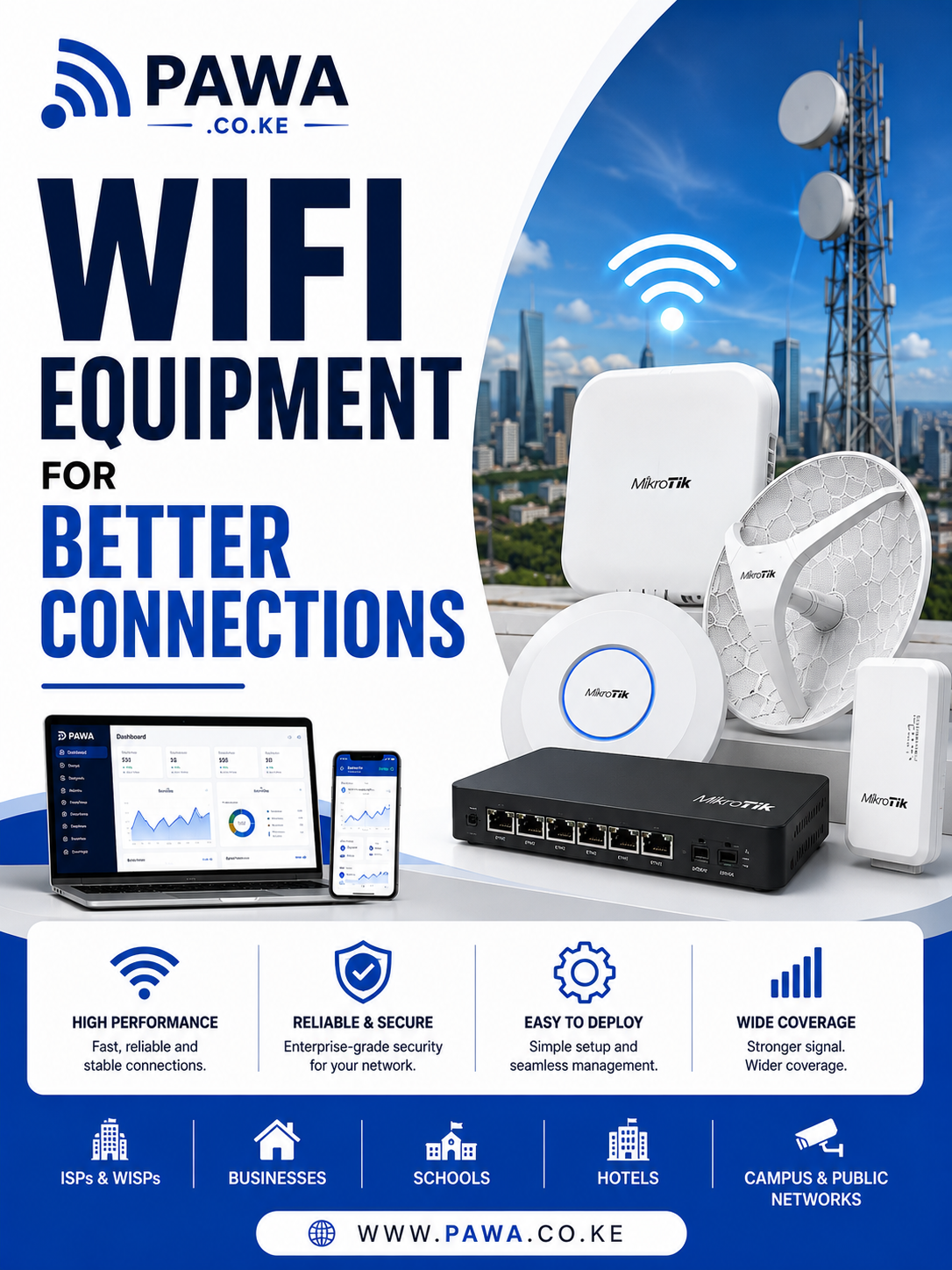
M-Pesa WiFi payment system technology is transforming how businesses, internet providers, hotels, apartments, estates, campuses, and public WiFi operators collect payments and manage WiFi users in Kenya. Instead of manually confirming M-Pesa payments and activating customers one by one, businesses can use an automated payment solution that connects mobile payments directly with WiFi access.
Introduction
The growth of smartphones, affordable internet-enabled devices, and mobile payments has created a strong demand for convenient WiFi services. Customers increasingly expect to connect to a network, choose an internet package, make a payment through M-Pesa, and start browsing without waiting for an administrator.
This is where an M-Pesa WiFi payment system becomes valuable. The technology can connect a WiFi network with a payment platform so customers can purchase internet packages using M-Pesa and receive access automatically after successful payment.
For WiFi businesses, this can reduce administrative work, improve customer experience, simplify payment tracking, and provide better control over internet users. It can also make it easier to operate a network with hundreds or thousands of customers without relying entirely on manual processes.
Whether you operate a small WiFi hotspot, residential WiFi network, guesthouse, apartment WiFi service, school network, cyber café, or larger internet business, automated payment and user management can make daily operations more efficient.
What Is an M-Pesa WiFi Payment System?
An M-Pesa WiFi payment system is a technology solution that allows customers to purchase WiFi internet access using M-Pesa. The payment platform communicates with the WiFi management system, allowing successful transactions to trigger internet access according to the package purchased.
Traditionally, a WiFi operator might receive a customer’s M-Pesa payment, check the transaction manually, confirm the amount, create or activate an account, and then send login details to the customer. This process becomes increasingly difficult as the number of users grows.
An automated M-Pesa WiFi payment system eliminates many of these manual steps.
A typical customer journey may look like this:
- The customer connects to the WiFi network.
- A captive portal or login page appears.
- The customer selects an internet package.
- The customer enters their phone number.
- An M-Pesa payment request is generated.
- The customer completes the payment.
- The payment is automatically confirmed.
- The customer’s WiFi account is activated.
- The customer receives internet access based on the purchased package.
This process allows customers to move from payment to connectivity with minimal intervention from the network administrator.
How Does an M-Pesa WiFi Payment System Work?
An M-Pesa WiFi payment system generally combines several technologies to create an automated internet access and payment environment.
The first component is the WiFi network itself. This may include routers, access points, switches, and other networking equipment responsible for providing wireless connectivity.
The second component is the WiFi management platform. This controls customers, internet packages, login sessions, bandwidth limits, access duration, and other network settings.
The third component is the payment integration. This allows customers to make payments through M-Pesa and enables the system to receive confirmation of successful transactions.
Once the payment has been confirmed, the system can automatically associate the transaction with the customer’s selected package. Depending on the configuration, the customer may then receive internet access for a specified period or until their purchased data allowance has been consumed.
For example, a WiFi operator could create packages such as:
- 1-hour WiFi access
- 3-hour WiFi access
- 12-hour WiFi access
- 24-hour WiFi access
- 7-day WiFi access
- 30-day WiFi access
- Data-based internet packages
The administrator can determine the price, duration, bandwidth allocation, and other conditions associated with each package.
This creates a structured system where payments and internet access are connected rather than being managed separately.
Why Businesses Need Automated WiFi Payments
Manual payment verification may work when a WiFi business has only a few customers. However, the process can become inefficient as the customer base increases.
Imagine an operator managing 500 customers. If customers must send payment messages, provide transaction details, and wait for an administrator to activate their accounts, the business can spend significant amounts of time handling routine transactions.
An M-Pesa WiFi payment system can automate much of this process.
Automation allows the operator to concentrate on network performance, customer support, marketing, package development, and business growth rather than repeatedly confirming individual payments.
It can also create a more consistent experience for customers.
Instead of asking, “Have you received my payment?” customers can make their payment and receive access through an automated process.
Key Features of an M-Pesa WiFi Payment System
A modern M-Pesa WiFi payment system can provide several features designed to simplify network and payment management.
1. Automated M-Pesa Payments
One of the most important features is the ability to accept M-Pesa payments electronically.
Customers can select their preferred package and initiate payment without having to contact the WiFi administrator.
Once the payment is successfully processed, the system can automatically update the customer’s account.
This reduces the need for manual transaction verification and makes the payment process faster.
2. Automated User Activation
After successful payment, customers can be activated automatically.
This means the administrator does not necessarily need to manually create or enable an account every time someone purchases a WiFi package.
Automated activation can be particularly useful for businesses operating throughout the day and night.
Customers can potentially purchase access outside normal business hours without waiting for an employee to respond.
3. Captive Portal
A captive portal provides the interface customers see when connecting to the WiFi network.
Instead of immediately receiving unrestricted internet access, the customer may first be directed to a branded login or payment page.
The portal can display available packages and provide instructions for making payments.
A well-designed captive portal can also strengthen branding by displaying the company’s name, logo, contact information, packages, and promotional messages.
4. Internet Package Management
A good M-Pesa WiFi payment system should allow administrators to create and manage different packages.
For example, a business could offer different packages based on duration or data allowance.
An administrator could define:
- Package name
- Price
- Duration
- Data allowance
- Bandwidth limits
- Number of devices
- User access conditions
This flexibility allows businesses to create packages suitable for different customer groups.
5. Customer Management
WiFi operators need to know who is using their network.
A centralized customer management system can help administrators monitor accounts, packages, payment status, active sessions, and access periods.
Instead of maintaining separate spreadsheets or handwritten records, businesses can have customer information organized within one platform.
6. Payment Tracking
An automated payment system can make it easier to monitor transactions.
Administrators may be able to view successful payments, pending transactions, customer accounts, purchased packages, and other payment information from a centralized dashboard.
This can make financial reconciliation easier and provide better visibility into business performance.
7. Expiry Management
WiFi access should normally end when a customer’s purchased package expires.
An automated system can manage expiry based on the package purchased.
For example, if a customer purchases 24-hour access, the system can calculate the expiry period and restrict access when the package expires.
This reduces the need for administrators to manually deactivate customers.
8. Bandwidth Management
A WiFi network can experience performance problems when a small number of users consume excessive bandwidth.
Bandwidth management allows administrators to establish limits for different users or packages.
For example, premium packages may receive higher speeds while basic packages receive lower bandwidth limits.
This helps operators create differentiated service offerings while protecting overall network performance.
Benefits of Using an M-Pesa WiFi Payment System in Kenya
The adoption of an M-Pesa WiFi payment system can provide several advantages to businesses offering paid internet access.
Faster Customer Access
Customers do not want to spend several minutes waiting for an administrator to confirm their payment.
Automation can reduce the time between payment and internet access.
When the payment process and WiFi management system are properly integrated, a customer can select a package, complete payment, and gain access through an automated workflow.
Reduced Manual Work
Manual payment confirmation can become repetitive.
An automated platform handles routine processes that would otherwise require administrator intervention.
This is especially important for growing WiFi businesses where hundreds of transactions may occur every day.
Better Customer Experience
Customers generally prefer simple and predictable payment processes.
An automated WiFi payment solution allows customers to purchase internet access at their convenience.
The easier it is for someone to pay and connect, the more likely they are to continue using the service.
Better Payment Records
Keeping track of payments manually can lead to mistakes.
An automated system can associate transactions with customer accounts and internet packages, making it easier to review payment history.
This can also help businesses identify successful transactions and monitor revenue.
24/7 Service
WiFi customers may need internet access at any time.
An automated payment platform can allow customers to purchase packages even when an administrator is unavailable.
This is particularly useful for public hotspots, residential networks, hotels, and businesses operating around the clock.
Improved Network Control
Payment management is only one part of operating a WiFi business.
Administrators also need to control users, packages, bandwidth, access duration, and network resources.
Integrating payment and network management can give operators greater control over the entire customer access process.
Who Can Use an M-Pesa WiFi Payment System?
An M-Pesa WiFi payment system is not limited to one type of business.
Different organizations can use automated WiFi payments depending on their network model.
WiFi Hotspot Businesses
Public WiFi hotspots can use automated payments to sell internet packages to customers.
A customer can connect to the hotspot, select a package, pay through M-Pesa, and receive access.
This can reduce the workload involved in serving multiple customers.
Apartments and Residential Buildings
Property owners and residential WiFi providers can use automated systems to manage internet access for tenants.
Instead of collecting payments manually, tenants can pay for their selected internet package and receive access according to the terms of their subscription.
Hotels and Guesthouses
Hotels can provide convenient WiFi access to guests through a controlled payment and authentication platform.
The system can support different access options depending on the hotel’s business model.
Schools and Campuses
Educational institutions can use centralized WiFi management to control internet access for students, staff, visitors, or other users.
Different groups can be assigned different access policies.
Cyber Cafés
Cyber cafés can use WiFi payment systems to allow customers to purchase internet time without requiring staff to manually manage every session.
Estates and Gated Communities
Estates can deploy centralized WiFi infrastructure and provide internet packages to residents.
A payment-enabled system can make it easier to manage subscribers and monitor account status.
Internet Service Providers
Small and growing internet providers can use automated payment and user management to simplify customer administration.
For providers serving many subscribers, automation can become an important part of scaling operations.
M-Pesa WiFi Payment System vs Manual Payment Management
The difference between automated and manual WiFi payment management becomes increasingly important as a business grows.
With manual management, a customer may send an M-Pesa payment, contact an administrator, provide transaction information, and wait for confirmation.
The administrator then checks the transaction, identifies the customer, activates the package, and potentially records the transaction manually.
This process can create delays and administrative work.
With an M-Pesa WiFi payment system, many of these processes can be automated.
| Manual WiFi Management | Automated WiFi Payment |
|---|---|
| Payment confirmation may be manual | Payment confirmation can be automated |
| Customer activation may require staff | User activation can be automated |
| Records may be maintained manually | Transactions can be organized digitally |
| Customers may wait for activation | Access can be provided automatically |
| Difficult to scale manually | Better suited to larger user bases |
| Greater administrative workload | Reduced routine workload |
Automation does not eliminate the need for network administrators. Instead, it allows administrators to spend less time performing repetitive tasks and more time managing the network and business.
How to Choose the Right M-Pesa WiFi Payment System
Choosing an M-Pesa WiFi payment system requires more than looking at payment functionality.
Businesses should consider how the platform handles both payments and network management.
Payment Integration
The platform should support reliable M-Pesa payment processing and transaction confirmation.
Businesses should understand how payment requests are generated, how transactions are confirmed, and how failed or incomplete payments are handled.
WiFi Compatibility
The solution should work with the network infrastructure being used by the business.
This may include routers, access points, hotspot gateways, captive portals, and authentication systems.
Scalability
A system suitable for 50 users may not necessarily be suitable for 5,000 users.
Businesses should consider future growth when selecting a platform.
Package Flexibility
The platform should allow administrators to create different packages based on the needs of their customers.
Reporting
Payment and user reports can help businesses understand sales, customer activity, package performance, and other operational metrics.
Security
Because the platform manages customer access and payment-related information, security should be an important consideration.
Businesses should choose systems that follow appropriate security practices and provide controlled access to administrative functions.
Ease of Management
The administrator dashboard should be easy to understand and use.
A complicated system can increase training requirements and make everyday operations unnecessarily difficult.
M-Pesa WiFi Payment System: Advanced Features, Implementation, Security and Business Growth in Kenya
M-Pesa WiFi payment system solutions are becoming increasingly useful for businesses that want to provide affordable, convenient, and automated internet access. After understanding the basic concept and benefits, the next step is looking at how these systems can improve network operations, customer management, payment processing, security, and business growth.
A modern WiFi business needs more than an internet connection and a router. As the number of users increases, the operator needs a reliable way to control access, collect payments, manage packages, monitor customers, and maintain network performance. Integrating M-Pesa payments with WiFi management brings these functions together in one workflow.
Advanced Features of an M-Pesa WiFi Payment System
A basic hotspot may allow users to connect to the internet, but a professional M-Pesa WiFi payment system can provide considerably more control.
The right platform can combine payment processing, authentication, bandwidth management, customer management, reporting, and automated access into one environment.
1. Automated Payment Requests
Customers should be able to select a package and initiate an M-Pesa payment without having to communicate with an administrator.
The payment process can be integrated into the WiFi portal, making it easier for customers to understand what they are purchasing and how much they need to pay.
This removes unnecessary steps from the customer journey.
For example, a customer arriving at a hotspot can connect to the network and immediately see available packages.
They can select a package, enter their mobile number, and complete the payment process.
Once the transaction has been successfully confirmed, the system can proceed with account activation.
2. Automated Internet Activation
One of the biggest advantages of an M-Pesa WiFi payment system is the ability to automate internet activation.
Instead of an employee checking a payment and manually activating a customer, the platform can process the transaction and update the user’s access automatically.
This is particularly useful for businesses with high transaction volumes.
If 100 customers make payments within a short period, manually activating each user can create a significant workload.
Automation allows the network to handle many transactions without requiring the administrator to process each one individually.
3. Captive Portal Management
A captive portal is an important part of a paid WiFi service.
It provides customers with a controlled webpage where they can log in, purchase packages, enter access credentials, or view available services.
A professional captive portal can be branded according to the business.
It can include:
- Business logo
- Company name
- Internet packages
- Package prices
- Payment instructions
- Customer support contacts
- Terms of service
- Promotional messages
A branded portal can make a small WiFi business look more professional while also making the customer journey easier to understand.
4. Multiple Internet Packages
Different customers have different internet requirements.
Some may only need internet access for one hour, while others may need connectivity for several days or an entire month.
An M-Pesa WiFi payment system can allow operators to create multiple packages.
For example:
- 1-hour package
- 3-hour package
- 6-hour package
- 12-hour package
- Daily package
- Weekly package
- Monthly package
Operators can also structure packages around data limits where appropriate.
Having multiple packages gives customers flexibility and allows the business to serve different market segments.
5. Bandwidth Control
Network congestion can become a serious challenge as the number of WiFi users grows.
Without bandwidth controls, a few heavy users may consume a significant amount of available capacity.
A WiFi management platform can allow administrators to establish bandwidth policies.
For example, a basic package may have a lower speed limit, while a premium package can provide higher speeds.
This creates a more predictable network environment.
Bandwidth management also makes it easier for operators to develop different pricing tiers.
6. User Authentication
Authentication determines who is allowed to access the network.
An automated system can use different authentication methods depending on the network architecture.
Customers may be authenticated using usernames, passwords, vouchers, phone numbers, or other supported credentials.
The objective is to ensure that only authorized users receive internet access.
Authentication also gives the administrator greater visibility into active customers.
7. Automatic Account Expiration
When a customer purchases a limited-duration package, their access should end according to the package conditions.
An automated M-Pesa WiFi payment system can manage expiration without requiring the administrator to manually disable each account.
For example, a customer purchasing a one-day package can receive access for the defined period.
Once the package expires, the system can restrict internet access until another package is purchased.
This creates a predictable process for both the customer and the business.
Payment Management and Reconciliation
Payment management is one of the most important aspects of running a paid WiFi service.
Businesses need to know how much money has been received, which customers have paid, what packages they purchased, and whether transactions were successful.
A centralized payment dashboard can simplify this process.
Tracking Transactions
The administrator can use payment records to identify transactions and associate them with customers.
This makes it easier to answer questions such as:
- How many customers paid today?
- Which packages are most popular?
- How much revenue was generated?
- Which payments were successful?
- Which transactions require attention?
Digital records can also reduce dependence on handwritten notes or separate spreadsheets.
Reducing Payment Errors
Manual payment management can result in mistakes.
An administrator may activate the wrong customer, enter the wrong package, overlook a payment, or accidentally provide access for the wrong duration.
Automation reduces the number of manual steps involved in the process.
The payment amount can be matched against the selected package, and the system can apply the appropriate access rules.
Revenue Monitoring
Payment reports can help operators understand the performance of their WiFi business.
For example, an operator may discover that daily packages generate more transactions while monthly packages produce more predictable recurring revenue.
This information can help guide pricing and package decisions.
How to Implement an M-Pesa WiFi Payment System
Implementing an M-Pesa WiFi payment system requires planning because the payment platform and network infrastructure need to work together.
Step 1: Assess the Existing Network
The first step is understanding the existing network.
The operator should identify:
- Internet connection
- Routers
- Access points
- Switches
- Network coverage
- Number of expected users
- Available bandwidth
- Existing authentication system
This information helps determine the appropriate architecture.
Step 2: Define Internet Packages
The business should decide what customers will purchase.
Packages can be based on time, data, speed, or subscription duration.
The operator should consider customer demand, available bandwidth, operating costs, and the target market.
Step 3: Configure Payment Integration
The payment component needs to be connected to the WiFi management platform.
The integration should be configured to handle payment requests and transaction confirmations.
The goal is to ensure that a successful payment results in the correct customer account being credited or activated.
Step 4: Configure Customer Authentication
The system then needs to determine how customers will authenticate.
The authentication method should be convenient for customers while giving administrators sufficient control.
Step 5: Configure Access Rules
The operator can define rules for each package.
These may include:
- Duration
- Bandwidth
- Data allowance
- Number of devices
- Expiry conditions
- Access restrictions
Step 6: Test the Complete Customer Journey
Before launching the system, the business should test the complete process.
A typical test should cover:
- Connecting to WiFi.
- Opening the captive portal.
- Selecting a package.
- Initiating payment.
- Completing payment.
- Confirming the transaction.
- Activating internet access.
- Checking the customer’s session.
- Testing package expiry.
Testing helps identify problems before customers begin using the system.
Security Considerations
Security should be a priority when implementing an M-Pesa WiFi payment system.
The platform manages network access and may process customer information, so administrators should take reasonable steps to protect both the network and the management platform.
Protect Administrative Accounts
Administrator accounts should use strong passwords and appropriate access controls.
Where available, additional authentication mechanisms can provide another layer of protection.
Separate Customer and Administrative Access
Customers should not have access to administrative interfaces.
Management systems should be protected from unauthorized access.
Monitor Network Activity
Administrators should monitor unusual activity and investigate suspicious behavior.
Network monitoring can help identify problems such as excessive bandwidth consumption, unauthorized access attempts, or unusual traffic patterns.
Secure Payment Communication
Payment integrations should use secure communication methods and follow the relevant requirements of the payment provider and technology platform.
Businesses should avoid storing sensitive payment information unnecessarily.
Keep Software Updated
Routers, management platforms, servers, and other components should be maintained and updated where appropriate.
Outdated software can create avoidable security and reliability problems.
Why Automation Helps WiFi Businesses Scale
One of the strongest reasons to implement an M-Pesa WiFi payment system is scalability.
Consider a small WiFi business with 30 customers.
Manual management may initially be manageable.
However, if the business grows to 300 or 3,000 customers, manually confirming every payment and activating every account becomes increasingly difficult.
Automation allows the business to handle a larger customer base without requiring the same increase in administrative workload.
This does not mean that infrastructure does not need to grow.
More customers may require:
- More bandwidth
- Additional access points
- Better routers
- Improved network architecture
- Stronger monitoring
- More reliable infrastructure
However, automation can ensure that administrative processes do not become the main bottleneck.
M-Pesa WiFi Payment System for ISPs
Internet service providers can benefit significantly from automated payment and access management.
An ISP may have hundreds or thousands of subscribers paying for different internet plans.
Instead of manually tracking each payment and updating each account, an integrated system can automate subscriber management.
Customers can select their plan, make payments, and have their account updated based on the payment status.
This can improve operational efficiency and reduce customer support requests related to payment activation.
For small ISPs looking to compete with larger providers, automation can also help create a more professional customer experience.
M-Pesa WiFi Payment System for Estates
Residential estates are another potential application.
An estate can provide shared WiFi infrastructure to residents while allowing individual users to purchase internet packages.
An M-Pesa WiFi payment system can help estate administrators or WiFi operators manage subscriptions and access.
Residents can pay for their selected packages without having to visit an office or contact an administrator every time they need internet access.
This model can be particularly useful where the estate provides centralized connectivity.
M-Pesa WiFi Payment System for Public Hotspots
Public hotspots can use automated payments to make internet services accessible to customers in locations such as:
- Shopping areas
- Transport hubs
- Restaurants
- Cafés
- Public spaces
- Events
- Commercial buildings
- Entertainment venues
Customers can connect to the hotspot and purchase access based on the packages available.
Because the payment process is automated, the operator can serve customers without needing a cashier or network administrator to activate each session.
M-Pesa WiFi Payment System for Small Businesses
Small businesses can also benefit from automation.
A café, restaurant, salon, coworking space, or entertainment venue may want to offer paid or controlled WiFi access.
The business can create packages appropriate to its customers and use the payment system to control access.
For businesses where WiFi is an additional revenue stream, automation can make the service easier to operate without requiring a dedicated employee.
Improving Customer Experience
The success of any WiFi business depends heavily on customer experience.
Customers expect internet access to be convenient.
If customers have to repeatedly contact an administrator to make payments or activate their accounts, the service can become frustrating.
An M-Pesa WiFi payment system simplifies the process by bringing payment and access together.
A customer can potentially complete the entire process without speaking to an employee.
The ideal experience is simple:
Connect → Choose Package → Pay → Get Access → Browse.
Reducing unnecessary steps can improve customer satisfaction and encourage repeat purchases.
Using Data to Improve the WiFi Business
A professional WiFi management system can also provide valuable operational information.
Businesses can analyze customer behavior to understand which packages perform best.
For example, an operator may discover that:
- Short-term packages have the highest number of transactions.
- Monthly subscriptions generate more predictable revenue.
- Certain locations have higher demand.
- Customers are more active at specific times.
- Some packages are rarely purchased.
These insights can help businesses make better decisions about pricing, marketing, bandwidth allocation, and network expansion.
Common Challenges When Implementing an M-Pesa WiFi Payment System
Although automation provides many advantages, businesses should also understand potential challenges.
Network Reliability
Payment automation cannot compensate for an unreliable internet connection.
The underlying network should be designed to provide stable connectivity.
Payment Delays
Payment confirmation may occasionally experience delays depending on external systems or network conditions.
The platform should have appropriate mechanisms for handling pending transactions.
Incorrect Package Configuration
If package settings are incorrect, customers may receive the wrong access duration or bandwidth allocation.
Administrators should test packages carefully before making them available.
Hardware Limitations
Older routers or access points may not support all required functionality.
Businesses should verify compatibility before implementation.
Poor WiFi Coverage
A payment platform cannot solve physical coverage problems.
Access points need to be positioned appropriately to provide reliable coverage.
How to Improve the Performance of Your WiFi Payment Business
An M-Pesa WiFi payment system should be part of a broader strategy for managing the entire network.
First, monitor bandwidth consumption regularly.
Second, ensure that access points are properly positioned.
Third, create packages that match customer demand.
Fourth, make the payment process as simple as possible.
Fifth, monitor payment and customer reports.
Sixth, provide clear customer support channels.
Finally, regularly evaluate the performance of the network and make infrastructure improvements as the customer base grows.
M-Pesa WiFi Payment System: Costs, Business Models, ROI, Best Practices and the Future of Automated WiFi in Kenya
M-Pesa WiFi payment system technology is creating new opportunities for businesses that want to provide internet access while automating customer payments and network management. In the first two parts, we explored what the technology is, how it works, its main features, implementation requirements, security considerations, and the types of businesses that can use it.
Part 3 focuses on the commercial side of the solution. This includes pricing considerations, potential revenue models, return on investment, best practices, common questions, and the future of automated WiFi services in Kenya.
Understanding the Cost of an M-Pesa WiFi Payment System
The cost of implementing an M-Pesa WiFi payment system depends on several factors. There is no single price that applies to every WiFi business because network size, hardware requirements, software features, customer numbers, and internet bandwidth can vary significantly.
A small hotspot may require only basic equipment and a simple payment integration, while a large WiFi provider may require multiple access points, powerful routers, centralized management, monitoring tools, servers, and more advanced payment functionality.
Businesses should therefore consider the total cost of operating the network rather than focusing only on the initial software or hardware cost.
Some of the expenses that may need to be considered include:
- Router and networking equipment
- WiFi access points
- Network installation
- Internet bandwidth
- Payment integration
- WiFi management software
- Hosting or server costs
- Technical support
- Maintenance
- Network security
- Backup connectivity
- Customer support
A proper assessment can help a business determine which components are necessary and which are optional.
Hardware Requirements
An M-Pesa WiFi payment system relies on a network infrastructure capable of managing customers and enforcing access policies.
The exact hardware requirements depend on the size and design of the network.
A small business may need:
- A reliable internet connection
- A compatible router
- One or more WiFi access points
- Network cabling
- A management platform
A larger operation may require:
- Multiple access points
- Managed switches
- High-performance routers
- Network controllers
- Backup internet connections
- Monitoring equipment
- Servers or cloud infrastructure
The hardware should be selected according to the expected number of simultaneous users rather than simply the number of registered customers.
For example, a network with 1,000 registered customers may not have 1,000 people online at the same time. Network planning should therefore consider expected peak usage.
Choosing the Right Internet Bandwidth
Bandwidth is another major consideration when building a paid WiFi business.
An M-Pesa WiFi payment system can automate payment and user access, but the customer experience will still depend heavily on the quality of the underlying internet connection.
If many customers share a limited connection, speeds may become slow during peak periods.
Businesses should therefore monitor:
- Average bandwidth consumption
- Peak bandwidth usage
- Number of active users
- Download traffic
- Upload traffic
- Package-specific usage
- Peak operating hours
Bandwidth management can then be used to distribute available resources more effectively.
For example, an operator could create basic, standard, and premium packages with different speed limits.
This gives customers more choice while allowing the business to manage its available bandwidth.
WiFi Business Revenue Models
An M-Pesa WiFi payment system can support different approaches to generating revenue.
The right model depends on the target customers and location.
Pay-Per-Use WiFi
Under this model, customers pay whenever they need internet access.
Packages can be sold by the hour, day, or another defined period.
This model can work well for public hotspots, cafés, transport areas, and other locations where customers may only need temporary connectivity.
Daily Packages
Daily WiFi packages can provide customers with internet access for a defined period.
This can be attractive to customers who need connectivity for work, study, entertainment, or travel without wanting a long-term subscription.
Weekly Packages
Weekly packages provide a middle ground between short-term access and monthly subscriptions.
They can be useful for customers who need internet access for several days but do not want a monthly commitment.
Monthly Subscriptions
Monthly packages can create recurring revenue.
This model can be particularly useful for apartments, estates, small offices, student residences, and other environments where customers require regular internet access.
Data-Based Packages
Businesses can also offer packages based on data allowances.
For example, customers may purchase a specific amount of data and use it within defined conditions.
This gives operators another way to structure pricing and manage network resources.
Calculating Return on Investment
Before investing in an M-Pesa WiFi payment system, a business should estimate whether the service can generate enough revenue to justify its costs.
A simple calculation can begin with expected monthly revenue.
For example, suppose a hotspot attracts 100 customers per day and the average customer spends KSh 20.
The estimated daily revenue would be:
100 × KSh 20 = KSh 2,000
If the hotspot operates consistently for 30 days:
KSh 2,000 × 30 = KSh 60,000
This is only an example. Actual revenue will depend on customer traffic, package prices, operating hours, competition, bandwidth costs, and other expenses.
The business should then subtract its monthly operating costs.
These could include internet service, electricity, maintenance, software, rent, technical support, and other expenses.
The remaining amount represents the potential operating return before considering other business costs and taxes.
Why Automation Can Improve Profitability
An M-Pesa WiFi payment system can improve operational efficiency by reducing repetitive administrative tasks.
Imagine an operator who spends several hours every day confirming payments and activating customers.
Those hours represent labor that could potentially be redirected toward other business activities.
Automation can handle routine processes such as:
- Payment confirmation
- User activation
- Package allocation
- Access expiry
- Customer records
- Transaction reporting
This can help reduce administrative workload.
The financial benefit does not necessarily come only from reducing staffing requirements. Faster activation and improved customer convenience can also encourage more purchases and repeat usage.
Reducing Customer Support Workload
Payment-related questions can consume significant customer support time.
Customers may ask:
“Have you received my payment?”
“Why am I not connected?”
“When does my package expire?”
“How much does the next package cost?”
An automated system can provide clearer processes and reduce some of these routine questions.
A customer portal can display package options, payment instructions, and account information.
When the customer journey is well designed, support staff can focus on technical problems and more complex customer requests.
Improving Customer Retention
Customers are more likely to return to a service that is convenient and reliable.
An M-Pesa WiFi payment system can contribute to customer retention by simplifying the purchasing process.
Customers do not need to repeatedly search for an administrator or wait for someone to activate their accounts.
They can simply reconnect, select a package, make their payment, and continue using the service.
However, payment convenience alone is not enough.
The WiFi connection must also be reliable.
If customers experience frequent disconnections, poor speeds, or limited coverage, they may stop using the service even if the payment process is excellent.
Best Practices for Running a Paid WiFi Network
An M-Pesa WiFi payment system should be supported by good network and business practices.
Provide Clear Packages
Customers should immediately understand what they are buying.
Each package should clearly communicate:
- Price
- Duration
- Speed
- Data allowance where applicable
- Number of devices
- Expiry conditions
Avoid confusing package descriptions.
Make Payment Simple
The fewer unnecessary steps customers have to complete, the better.
The payment page should be easy to understand on both smartphones and other WiFi-enabled devices.
Monitor Network Performance
Operators should regularly monitor the network.
Important metrics can include:
- Active users
- Bandwidth utilization
- Access point performance
- Network uptime
- Authentication failures
- Connection problems
Monitoring can help identify problems before they become major customer complaints.
Maintain Reliable Equipment
Routers and access points should be maintained properly.
Hardware failures can interrupt service and affect revenue.
Businesses should also consider having replacement equipment available for critical components.
Offer Customer Support
Even an automated system needs customer support.
Customers may experience payment delays, device problems, forgotten credentials, or connectivity issues.
Providing a clear support channel can improve customer confidence.
Marketing an Automated WiFi Service
Having an M-Pesa WiFi payment system is only part of building a successful WiFi business.
Customers need to know that the service exists.
Operators can promote their WiFi service through:
- Posters
- Signage
- Social media
- Local business partnerships
- Referral campaigns
- SMS marketing where appropriate
- Flyers
- Website promotion
- Customer referrals
The marketing message should focus on the benefits customers care about.
For example:
“Connect. Pay. Browse.”
“Affordable WiFi at your fingertips.”
“Fast internet access with convenient M-Pesa payments.”
The exact marketing message should reflect the actual capabilities and performance of the network.
Using Location to Increase WiFi Revenue
Location can have a major influence on the success of a WiFi business.
A hotspot located in an area with high foot traffic may attract more customers than one located in a low-traffic area.
Potential locations can include:
- Student areas
- Apartment complexes
- Markets
- Shopping centers
- Restaurants
- Transport hubs
- Offices
- Entertainment venues
- Tourist areas
- Residential communities
Before investing heavily, businesses should research customer demand and existing competition.
The availability of mobile data also means that a paid WiFi service needs to provide a compelling reason for customers to connect.
Competitive pricing, reliable speeds, convenient payment, and good coverage can help differentiate the service.
The Role of Analytics
Modern WiFi businesses can use analytics to make better decisions.
An M-Pesa WiFi payment system can provide useful information about transactions and customer activity when properly configured.
Businesses can analyze which packages customers purchase most frequently.
They can also identify busy periods and locations.
For example, if most customers purchase hourly packages between 6 p.m. and 10 p.m., the operator can ensure that sufficient bandwidth is available during those hours.
If a particular package is rarely purchased, the business can review its price or features.
Data-driven decisions can help operators improve the network and pricing strategy over time.
Scaling From One Hotspot to Multiple Locations
A successful WiFi business may eventually want to expand.
An M-Pesa WiFi payment system can make multi-location operations easier when the platform supports centralized management.
Instead of managing each hotspot completely independently, the operator can potentially manage users, packages, payments, and reports from a central dashboard.
This creates opportunities to build a larger WiFi network.
For example, a business could operate hotspots in several apartment buildings, cafés, commercial centers, or public locations.
Centralized management can make it easier to compare performance between locations.
An operator could identify which hotspot generates the highest revenue and which locations require network improvements.
Common Mistakes to Avoid
Businesses implementing an M-Pesa WiFi payment system should avoid several common mistakes.
Choosing Hardware Based Only on Price
Cheap equipment may not always provide the performance required for a growing network.
Businesses should consider capacity, reliability, support, and scalability.
Ignoring Coverage
A powerful internet connection does not automatically guarantee good WiFi coverage.
Access points should be positioned strategically.
Offering Too Many Packages
Too many packages can confuse customers.
It is often better to start with a small number of clearly differentiated packages and expand based on customer demand.
Failing to Monitor Bandwidth
Without monitoring, operators may not understand why customers experience slow speeds.
Bandwidth usage should be reviewed regularly.
Not Testing Payments
Payment workflows should be tested before launching publicly.
Businesses should understand what happens when a payment succeeds, fails, is delayed, or is cancelled.
Neglecting Security
Network management interfaces should be protected from unauthorized access.
Customer information and payment-related data should be handled responsibly.
Frequently Asked Questions
What is an M-Pesa WiFi payment system?
An M-Pesa WiFi payment system is a solution that connects M-Pesa payments with WiFi access management. It can allow customers to purchase internet packages and receive access after successful payment.
Can customers pay for WiFi using M-Pesa?
Yes. A properly configured solution can integrate M-Pesa payment functionality with the WiFi customer journey, allowing customers to pay for selected internet packages.
Can WiFi access be activated automatically after payment?
Yes. Where the payment platform and WiFi management system are properly integrated, successful transactions can trigger automated user activation.
Can I create different WiFi packages?
Yes. A suitable system can support different packages based on factors such as duration, speed, or data allowance.
Can an automated WiFi system manage expired users?
Yes. Access policies can be configured so that customer access expires according to the conditions of the package purchased.
Is this suitable for small WiFi businesses?
Yes. Small hotspots can use automation to simplify payments, customer activation, and access management. The system can also provide a foundation for future expansion.
Can ISPs use automated M-Pesa WiFi payments?
Yes. Internet providers can integrate payment and customer management to simplify subscriber activation and payment administration, depending on their network architecture.
Can apartment buildings use WiFi payment systems?
Yes. Apartments and residential communities can use controlled WiFi access and automated payments to manage internet services for residents.
Does a payment system improve WiFi speed?
No. Payment automation does not automatically increase bandwidth or WiFi speed. Network performance depends on internet capacity, hardware, configuration, coverage, and the number of simultaneous users.
Is an M-Pesa WiFi payment system secure?
Security depends on the specific implementation. Businesses should use secure payment integrations, protect administrator accounts, maintain network equipment, control access to management systems, and follow appropriate security practices.
The Future of Automated WiFi Payments in Kenya
The future of WiFi payment services is likely to become increasingly automated.
As more businesses deploy managed WiFi networks, customers will expect faster and more convenient ways to purchase internet access.
An M-Pesa WiFi payment system can become part of a broader digital infrastructure that combines payments, authentication, customer management, analytics, bandwidth management, and automated service delivery.
Future platforms may increasingly focus on intelligent network management, centralized dashboards, detailed analytics, automated customer communication, flexible subscriptions, and multi-location management.
For businesses, the opportunity is not simply to sell internet access.
It is to build a complete digital service around connectivity.
Why Businesses Should Consider Automation
An M-Pesa WiFi payment system can help businesses move away from manual payment confirmation and toward a more efficient digital workflow.
Instead of treating payment and internet access as separate processes, automation connects them.
The result can be a simpler customer experience and a more manageable operation.
Businesses can spend less time handling routine activation requests and more time improving their network, attracting customers, and developing new services.
As customer expectations continue to change, convenience will remain an important factor in the success of WiFi businesses.
Final Conclusion
An M-Pesa WiFi payment system offers Kenyan WiFi operators a practical way to automate internet payments and customer access. From public hotspots and cafés to apartments, estates, schools, hotels, and ISPs, the technology can be adapted to different environments and business models.
The biggest value comes from connecting several processes into one workflow. Customers can select packages, make payments, and receive internet access without requiring an administrator to manually handle every transaction.
For operators, automation can improve payment tracking, customer management, package administration, bandwidth control, reporting, and scalability.
However, successful implementation requires more than payment integration. Businesses need reliable network infrastructure, appropriate bandwidth, secure configurations, good customer support, clear packages, and ongoing monitoring.
When these elements work together, automated WiFi can become more than a connectivity service. It can become a scalable digital business model that makes internet access easier for customers while making network operations more efficient for providers.
For Kenyan businesses looking to monetize WiFi, automate customer access, and simplify M-Pesa-based payments, adopting the right M-Pesa WiFi payment system can be an important step toward building a more efficient and scalable internet service.
- M-Pesa WiFi payment system
- M-Pesa WiFi payment system
- M-Pesa WiFi payment system
- M-Pesa WiFi payment system
- M-Pesa WiFi payment system
- M-Pesa WiFi payment system
- M-Pesa WiFi payment system
- M-Pesa WiFi payment system
- M-Pesa WiFi payment system
- M-Pesa WiFi payment system
- M-Pesa WiFi payment system
- M-Pesa WiFi payment system
- M-Pesa WiFi payment system
- M-Pesa WiFi payment system
- M-Pesa WiFi payment system
- M-Pesa WiFi payment system
- M-Pesa WiFi payment system